The right training turns extra energy into confidence, focus, and steady progress you can actually see week to week.
Parents in Vacaville tell us the same thing in different ways: you want your child to feel confident, stay active, and handle pressure better at school and in social situations. Grappling is one of the most practical ways we’ve found to build those skills because it’s hands-on, mentally engaging, and grounded in real problem-solving.
In our youth program, we teach grappling with a strong focus on safety, structure, and age-appropriate progress. Kids and teens learn how to move their bodies with control, how to stay calm in uncomfortable situations, and how to work with training partners respectfully. It’s physical, yes, but it’s also quietly educational.
If you’ve been curious about grappling in Vacaville, this guide breaks down the benefits we see most often in kids and teens, along with what you can expect from the class experience and how to support your child’s training at home.
Why grappling clicks for kids and teens
Grappling is a close-range martial art focused on control, positioning, balance, and leverage. That matters for youth because success isn’t limited to being the fastest or the strongest. Technique and decision-making play a huge role, so a smaller student can still do very well when the fundamentals are solid.
We also like that grappling naturally rewards patience. You can’t rush your way through a good position. Kids learn to slow down, breathe, and make the next right choice instead of reacting emotionally. That mindset carries over into daily life more than most people expect.
Another reason it works well for youth is that classes have built-in feedback. Students feel what happens when posture breaks, when balance shifts, or when they forget to protect a limb. It’s immediate and memorable, and it helps the learning “stick.”
Physical benefits: stronger, more coordinated, and more capable
Full-body fitness without the treadmill vibe
Grappling training builds strength, endurance, and mobility in a way that feels more like play than “exercise.” Between warm-ups, movement drills, technique practice, and controlled sparring, students are constantly using their whole body.
Over time, we often see:
- Better core strength and posture from learning stable positions
- Improved grip strength and overall body control
- More flexible hips and shoulders from safe, progressive movement
For kids who don’t love traditional sports, this can be a big deal. Training feels purposeful, and the workouts don’t get boring fast.
Balance, coordination, and spatial awareness
A big part of grappling is learning how to base, shift weight, and move around another person. That develops coordination quickly, especially when we teach students to bridge, shrimp, sprawl, and stand up with proper mechanics.
These skills translate well to other activities too. We’ve watched students become more agile on the soccer field, steadier on a skateboard, and less “clumsy” in everyday movement, which is a nice bonus you notice at home.
Healthy intensity and safer progress
Because grappling doesn’t rely on strikes, we can emphasize control and technical development without building a culture of getting hit. That doesn’t mean it’s easy. It’s challenging in a good way. But with clear rules, proper supervision, and partner matching, youth classes can be intense while still being responsible.
We also coach students to tap early and respect taps immediately. That’s not just etiquette. It’s one of the best safety habits a young athlete can learn.
Mental and emotional benefits: calmer under pressure
Focus that carries into school
Grappling requires attention. If a student zones out, technique falls apart quickly. That’s why training can support academic habits like listening, following steps, and staying engaged even when something feels difficult.
We break techniques into manageable pieces and repeat them with purpose, which helps students build concentration. With time, many kids become more comfortable sticking with a task instead of bouncing to something else the moment it gets challenging.
Self-control and emotional regulation
One of the most valuable benefits we see is improved self-control. In grappling, students end up in uncomfortable positions sometimes. The lesson isn’t panic. The lesson is “solve it.” Breathe, protect yourself, create space, and work your escape.
Research on youth Brazilian Jiu-Jitsu training has shown measurable improvements in self-control for children who trained consistently, compared to peers who did not. We see that idea play out on the mat all the time: students learn to pause, think, and respond instead of reacting.
Confidence that’s earned, not hyped up
There’s a different kind of confidence that comes from grappling. It’s not loud. It’s steady. Students know what they’ve practiced, they know they can handle pressure, and they’ve tested themselves in a controlled environment.
That confidence often shows up in small moments: making eye contact, speaking up, trying out for something new, or simply walking into a new room without shrinking. It’s hard not to notice when it clicks.
Character benefits: discipline, resilience, and better habits
The power of consistent routines
Kids thrive on routines when the routine makes sense. Our classes have structure: warm-up, technical lesson, partner drills, and supervised live work. Students learn what’s expected, how to line up, how to listen, and how to move with purpose.
Discipline grows in a practical way. It’s less about being “tough” and more about showing up, paying attention, and trying again even after a rough round.
Resilience through safe challenge
In grappling, everyone gets stuck sometimes. Even advanced students. That normalizes struggle, which is a healthy lesson for kids and teens who feel pressure to be perfect.
We coach students to treat setbacks as information:
- If you got swept, your base needs work
- If you got controlled, your frames and movement need work
- If you got tired, your pacing needs work
When training is framed this way, resilience becomes a skill, not a personality trait you either have or don’t.
Respect and responsibility
Because partners are essential in grappling, students learn quickly that progress depends on mutual respect. We reinforce responsibility constantly: safe grips, controlled pressure, no reckless movements, and taking care of teammates.
That’s also why many parents appreciate youth grappling classes Vacaville families can trust. The culture matters as much as the curriculum.
Social benefits: real connection without the drama
Positive friendships and teamwork
Even though grappling is an individual sport, the learning process is cooperative. Partners help each other drill, give realistic resistance, and share the work of getting better. Over time, students build friendships through consistent effort, not just small talk.
That can be especially helpful for teens who feel awkward in traditional team sports settings. The mat gives them something concrete to do together, which lowers social pressure.
Pro-social behavior and healthy boundaries
Studies comparing different combat sports have found that Brazilian Jiu-Jitsu training can correlate with reduced aggression and improved pro-social behavior in youth. We think part of that comes from the training environment: you learn control, you learn consequences, and you learn how to handle intensity without losing your head.
Kids also learn boundaries in a very practical way. If you’re uncomfortable, you tap. If your partner taps, you stop. That’s a clear, repeated lesson in consent and respect.
Benefits specific to teens: confidence, stress management, and leadership
Teens deal with a lot: school demands, social pressure, and sometimes the weird emotional rollercoaster of growing up. Grappling gives them a place to work hard, reset, and measure progress in a way that doesn’t depend on likes or opinions.
We also see teens develop leadership naturally when we set expectations:
- Helping newer students feel welcome
- Drilling with control instead of trying to “win” every rep
- Taking feedback from coaches and applying it immediately
- Learning how to train hard without being reckless
That combination of humility and competence is a strong foundation, on and off the mat.
What a typical youth class looks like here
If you’re new to grappling, it helps to know what your child will actually be doing in class. While every session varies, our youth classes tend to follow a consistent flow so students feel grounded and can learn faster.
Here’s a simple snapshot of what we typically cover:
- Movement warm-ups that build coordination and body awareness
- Technique instruction with clear details and a reason behind each step
- Partner drilling with coaching so students don’t just “go through the motions”
- Controlled positional training to practice specific skills under light pressure
- Supervised live rounds when appropriate, with safety rules reinforced constantly
- A quick wrap-up that highlights effort, learning, and what to focus on next
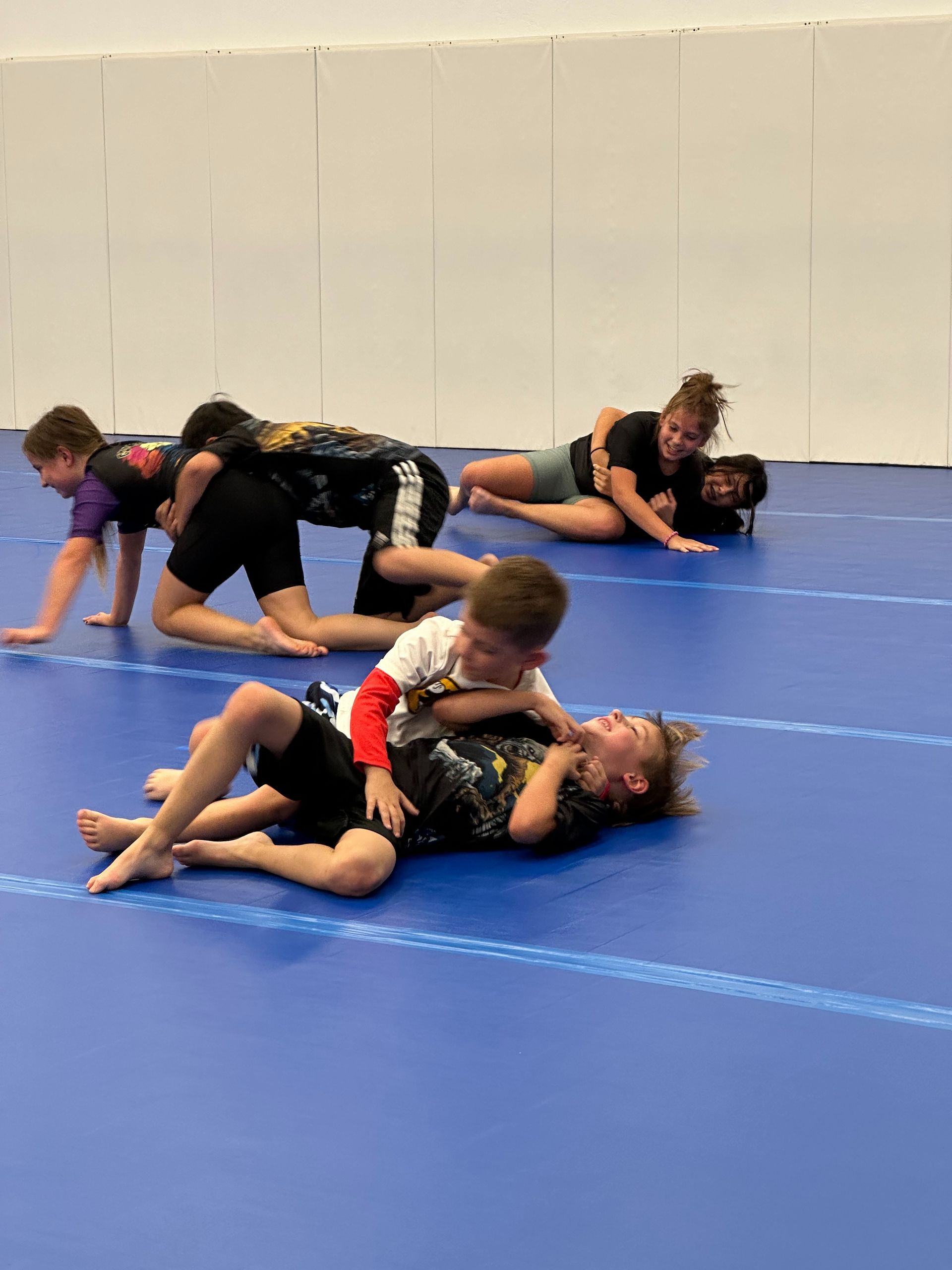
That structure keeps the room organized while still leaving space for kids to enjoy training. And yes, you’ll probably see some sweaty smiles afterward.
Safety, injuries, and smart training habits
No youth sport is risk-free, and grappling is no exception. As the sport grows, injury concerns come up more often, especially when students push too hard too fast or compete without enough preparation.
We reduce risk by emphasizing fundamentals, proper supervision, controlled intensity, and good communication. We also encourage families to support a few simple habits that go a long way:
1. Consistent attendance matters more than occasional “big weeks” of training
2. Good sleep and hydration improve performance and reduce injury risk
3. Short nails and clean gear help prevent scratches and skin issues
4. Tapping early is a skill, not a weakness
5. Progress comes from learning positions, not forcing submissions
If you ever have questions about what your child is doing in class, we want you to ask. The safest environment is one where parents feel informed and students feel supported.
How to know if your child is ready for grappling
Most kids can start as long as they can follow basic instructions and participate safely with partners. If your child is very young, very shy, or easily overwhelmed, that’s not automatically a problem. It just means we may focus more on movement, listening skills, and gentle partner work at first.
A few good signs your child will do well include:
- Willingness to try, even when something feels new
- Ability to handle small corrections without shutting down
- Comfort with basic personal space boundaries and respectful touch in sport
And if your teen is motivated by goals, grappling provides plenty of them: improving escapes, earning stripes, building conditioning, and eventually competing if that becomes a good fit.
Take the Next Step
Building real skill takes time, but it should feel positive along the way. When you train consistently, grappling can support your child’s fitness, focus, and confidence in a way that shows up at home, at school, and in everyday choices.
Our youth program at Vacaville Grappling Academy is designed to help kids and teens grow through structured training, clear coaching, and a culture that values safety and respect. If you’re ready to explore grappling in Vacaville with a team that keeps the experience both challenging and supportive, we’d love to help you get started.
Help Your Child Thrive Join Youth Grappling Today!